An experiment in attention, curiosity and organic digital growth
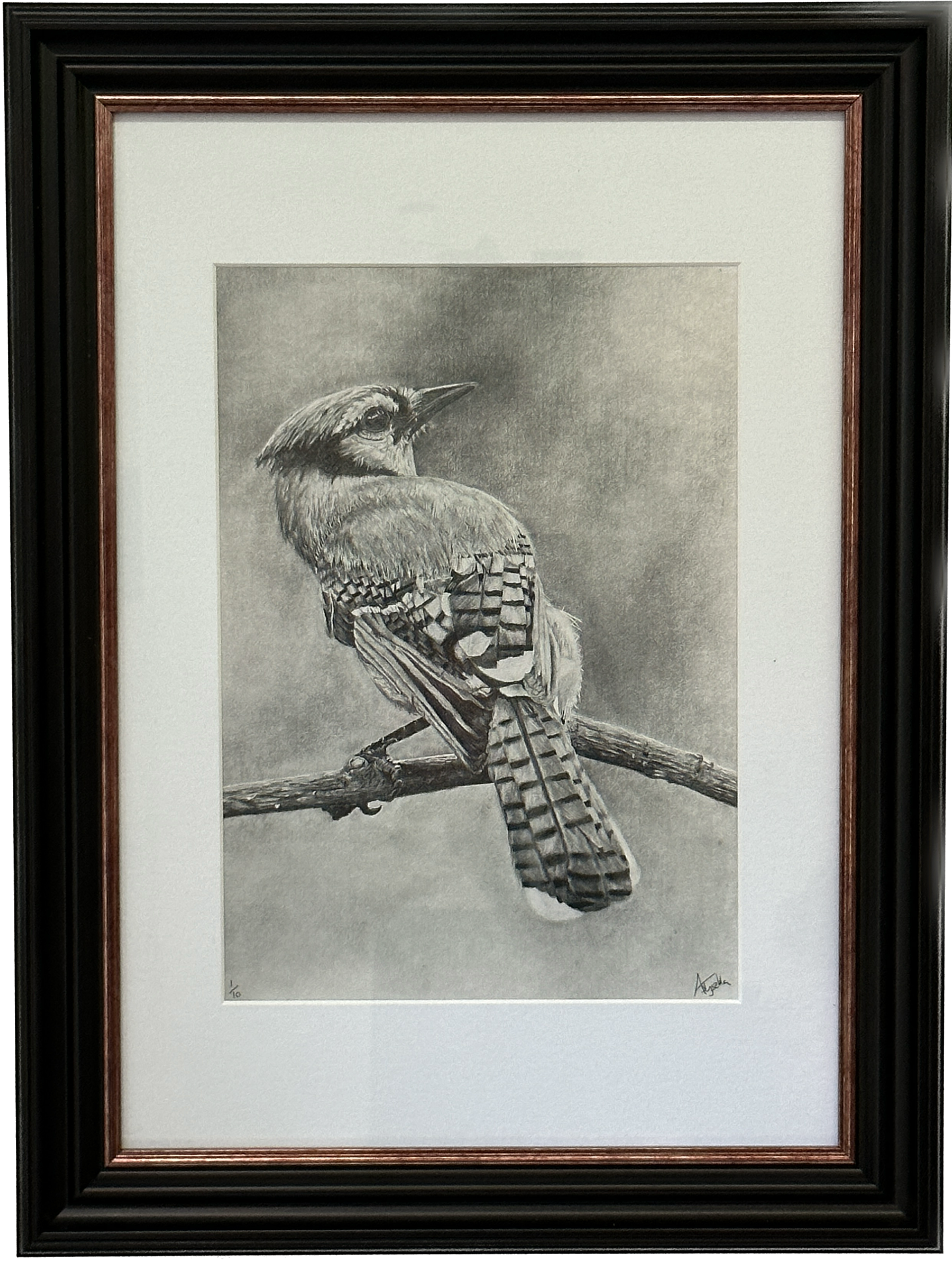
Bird Drawing started with a deliberately absurd proposition: could an otherwise ordinary drawing be transformed into something people genuinely wanted to follow simply through the way it was presented?
Rather than treating marketing as something applied to a finished product, I designed the concept so that the marketing mechanism became part of the product itself.
My Role
Concept Development · Creative Strategy · Content Direction · Filming · Editing · Funnel Design
The Concept
The project centred around a faceless recurring character appearing in unusual locations with the same bird drawing.
The visual language was intentionally strange but restrained: the same anonymous figure, the same artwork and an unexplained presence across different environments. The intention was to create recognition through repetition while allowing curiosity to do much of the storytelling.
At the centre of the concept was an intentionally provocative £1 million valuation of the artwork, supported by an audience incentive tied to the eventual outcome. The proposition was deliberately difficult to ignore, giving the content a story larger than the artwork itself while creating the foundations for audience participation.
Designing for Organic Attention
At its core, the project was an experiment in the value of attention. If something could capture global attention and sit at the forefront of the internet, even briefly, what would that attention actually be worth?
Rather than treating views simply as a marketing metric, I wanted to explore whether concentrated cultural attention could become a source of value in itself — and whether a system could be designed to both create and measure that relationship.
The initial content was designed to create intrigue around a recurring character and an unexplained piece of artwork. Repeated exposure would gradually build recognition, while deliberately withholding context gave audiences a reason to investigate the story for themselves.
The ambition was for the audience eventually to recognise the character and artwork before necessarily understanding the story behind them. The question becoming:
“Who’s the guy with the bird drawing?”
Beyond generating curiosity, I designed a wider growth mechanism around the relationship between attention, value and incentive. Rather than starting with something valuable and using that value to purchase exposure, I explored whether that relationship could be reversed: could collective attention help create the value that incentivised further attention?
The strategy was designed so that participation contributed towards the project's wider objective rather than simply promoting it. As collective attention increased, so could the project's recognition, perceived significance and ultimately the strength of the incentive surrounding participation. This created a system where successful growth could theoretically make the conditions for further growth stronger.
Importantly, the mechanism didn't depend on continually increasing advertising spend or individually rewarding people simply for sharing content. The incentive emerged from the collective outcome participants were helping to create, aligning individual motivation with the success of the wider project.
The result was a deliberately circular growth model:
Attention creates value → value strengthens incentive → incentive attracts participation → participation creates further attention.
The objective wasn't simply to produce something that might go viral. It was to explore whether virality itself could become part of the value-creation mechanism. Turning attention from a marketing outcome into the resource that both created value and powered further growth.
Testing the Concept
I moved beyond ideation and began translating the strategy into content, filming and editing a series of early concepts to test how the idea could work in practice.
This involved experimenting with locations, framing, pacing and different content structures while maintaining the recurring visual language needed to build recognition. Working independently also introduced practical production constraints, requiring me to adapt concepts around what could realistically be filmed while simultaneously directing and appearing in the content.
These tests allowed me to evaluate not only the creative direction, but whether the underlying idea could be communicated with enough intrigue to encourage someone to take the next step.
Designing the Digital Journey
The website was conceived as a continuation of the content rather than a separate destination.
I began developing a deliberately minimal digital experience that preserved the mystery established through the films while gradually revealing more of the concept. The challenge was finding the balance between intrigue and understanding, giving visitors enough information to keep them engaged without immediately explaining away the curiosity that brought them there.
The wider funnel was designed around that progression: turning passive exposure into curiosity, curiosity into active discovery, and discovery into a deeper interaction with the project.
Reflection
Bird Drawing represents one of my more experimental projects because the creative execution and marketing strategy were developed as a single system.
Rather than beginning with a conventional product, brand identity or campaign brief, the project began with a behavioural question about attention and value, then worked backwards into the content, visual identity and digital experience needed to explore it.
Although still conceptual and experimental, the project pushed me to think beyond individual pieces of content and consider how strategy, storytelling, audience behaviour, filmmaking and digital design can work together as one connected experience.